DealDash - Bid & Save Auctions
- 4.6
- Rating
- 5.00M
- Installs
- Free
- Price

 Analysis by App-foxy
I came away from DealDash - Bid & Save Auctions with a fairly clear impression: it is most useful when you treat shopping as a timed activity rather than a simple search for the lowest listed price. This free shopping app from DealDash.com combines live auctions with savings and free shipping, so the experience feels closer to watching a sale unfold than adding an ordinary product to a cart. I would recommend it to patient shoppers who enjoy making decisions during an auction, but not to anyone who needs a predictable price and a quick checkout every time.
The app has been available since January 15, 2014, and its audience is substantial, with more than five million installs and an average rating of 4.7 from roughly fifty-seven thousand ratings. Those figures do not replace personal judgment, but they do suggest that the auction format has found a lasting audience. After spending time with it, I can understand why: the interface is built around urgency and discovery, yet the basic purpose remains familiar enough for anyone who has used a shopping app before.
How the auction experience changes ordinary shopping
The first thing I noticed is that DealDash does not encourage the same browsing rhythm as a conventional marketplace. On a standard retail app, I usually search, compare a few sellers, check delivery details, and buy. Here, the important question becomes whether I want to participate in a live opportunity at all. That shift makes the app more engaging, but it also demands more attention and self-control.
You May Also Like

 Blood Strike: 2.5 Anniversary
Blood Strike’s Loadouts Turn Every Drop Into a Tactical Gamble
A close look at Blood Strike’s custom loadouts: how fast access to signature weapons reshapes its battle royale rhythm, rewards preparation, and narrows the gap between fights.

 Pandora - Music & Podcasts
Pandora’s Music Is Easy to Start, but Harder to Recover
Pandora’s strength is its low-effort path from a seed to a station. Its weak spot is how much confidence it asks you to place in connection, setup, and quiet recovery.

 8 Ball Pool
 Is Built on Rivalries, Rematches, and Routine
A close look at the rivalries, rematches, shared routines, and unanswered safety questions that turn a quick pool match into a persistent mobile community.

 Samsung Music
’s Quiet Strength Is Playing What You Already Own
Its reach comes less from spectacle than from dependable access to a personal library. That simplicity is both the app’s strongest retention engine and its ceiling.

 AccuWeather: Weather Radar
AccuWeather Review: A Quick, Clear Forecast for Everyday Decisions
For everyday plans, the best forecast is the one you can understand quickly. AccuWeather makes rain timing, radar, and local conditions easy to act on, with a few trade-offs.

 Hill Climb Racing
Why Hill Climb Racing Still Turns Crashes Into One More Run
A tiny car, a bumpy hill and one more upgrade: Hill Climb Racing keeps resurfacing because its simple chaos makes every near-miss feel personal.
More From Our News Desk
View All News


Live auctions work best when I enter with a clear idea of what I am willing to spend and how much time I am prepared to give the process. Without that boundary, the countdown and changing activity can make a small purchase feel more important than it really is. My most useful habit was deciding on a maximum overall budget before opening an auction, rather than making that decision while the event was already moving.
The savings angle is appealing because it gives the app a purpose beyond entertainment. I can browse for useful household items, gifts, or products I might already be considering, then decide whether the auction format offers a sensible route to buying them. The promise of always-free shipping also makes the final cost easier to think about than on marketplaces where a low-looking price changes after delivery is added.
That said, free shipping should not be treated as proof that every purchase is automatically a bargain. The real value depends on the final auction result, the amount of participation involved, and whether I genuinely wanted the item. A product that is inexpensive but unnecessary is still wasted money. I found the app strongest when I used it as a focused way to look for a particular type of deal, not as a place to browse endlessly.
What I found most useful during regular shopping
One practical workflow is to separate discovery from bidding. I can first look through the available auctions and note products that fit a real need. Only after narrowing that list should I decide which events deserve my attention. This avoids the common trap of joining something simply because the product looks attractive in the moment.
A second useful habit is to compare the auction opportunity with an ordinary retail alternative before committing. If I need a replacement item today, a normal store or standard shopping app is usually better because the price and availability are clearer. If I am shopping for a future gift or a non-urgent household purchase, I have more room to wait and judge whether participating makes sense.
The app is also more comfortable for short, deliberate sessions than for constant monitoring. I prefer opening it when I have a specific shopping goal, checking what fits that goal, and leaving when nothing looks worthwhile. That approach reduces the pressure created by live activity and makes the savings promise easier to evaluate honestly.
For a realistic example, imagine that I am looking for a small gift for a family member several weeks before a birthday. I can use DealDash to explore relevant auctions, decide on a strict total budget, and participate only when the item and timing suit me. Because the purchase is not urgent, I can walk away from an unappealing result instead of paying simply because I have already spent time watching it. In that situation, the app adds a playful route to shopping without forcing me to rely on it.
Strengths that matter beyond the store summary
The live format gives the app a sense of occasion that ordinary price-comparison tools do not have. A typical shopping app is efficient, but it can also be passive: I search, filter, and select. DealDash asks me to pay attention to the timing of an opportunity. For some people that will feel distracting; for me, it was the main reason to return.
Another strength is the combination of auction browsing and a familiar product-shopping purpose. I am not opening a separate auction service just to watch bids. I can approach the app with practical shopping categories in mind and decide whether the event-based format suits the purchase. That makes it more approachable than a platform designed only for experienced auction users.
The free-shipping promise is particularly helpful when I am comparing the overall value of a purchase. Delivery charges often make online bargains less attractive, so removing that part of the calculation makes the result easier to judge. I still need to consider the auction outcome and my own spending limit, but at least the final decision is not complicated by an unexpected shipping addition.
I also appreciate that the app is free to install and is rated for Everyone. That makes it easy to try without paying an entry fee for the application itself, and the age classification makes it broadly accessible as a shopping product. It is worth remembering, however, that an app being free does not mean the shopping activity has no financial consequences. I would still approach every auction as a real purchase decision.
The main weakness is the pressure of participation
The biggest limitation is not a missing shopping category or a complicated installation process; it is the mental pressure created by live auctions. A normal product page lets me pause indefinitely. A live event encourages immediate choices, and that can blur the line between finding value and chasing an outcome.
This matters especially for people who dislike uncertainty. If I want to know the exact amount before I buy, DealDash is less comfortable than a regular retailer. Even when the product itself is familiar, the auction context changes how predictable the purchase feels. I would not use it for something essential, time-sensitive, or tied to a fixed budget where surprises would cause a problem.
The format can also make time part of the cost. Even if shipping is free, watching auctions and deciding when to participate requires attention. That may be enjoyable for one shopper and frustrating for another. I found that the app offered better value when I counted my time as part of the decision instead of assuming that every possible saving was worth pursuing.
There is also a risk of confusing excitement with usefulness. A live auction can make an ordinary product feel unusually urgent. My solution was simple but important: I asked myself whether I would still want the item if I had seen it at a normal store that morning. If the answer was no, I left the auction rather than letting the event decide for me.
Compared with a conventional marketplace, DealDash is therefore less predictable but potentially more engaging. Compared with a price-comparison app, it offers a more active route to savings but less immediate certainty. Compared with a standard auction service, its shopping focus makes it easier to approach, especially for someone who wants products rather than collectibles. The right alternative depends on whether I value control, speed, or participation most.
Who should use it, and who should skip it
I think DealDash is a good fit for patient bargain hunters who enjoy live events and can follow a firm budget. It may also suit shoppers who have flexible delivery needs, like browsing for gifts, or enjoy checking opportunities without needing to buy immediately. The app is especially interesting for someone who finds ordinary shopping too mechanical and wants a more interactive way to look for savings.
It is less suitable for people who want a fixed price, a guaranteed quick purchase, or a completely passive shopping experience. If I am replacing something urgently, I would choose a normal retailer. If I am comparing exact prices across sellers, a conventional marketplace is usually clearer. If I know that timed decisions encourage me to spend more than planned, I would avoid the auction format altogether.
New users should begin with observation rather than immediate participation. I would spend a little time learning how the live shopping flow feels, identify products that genuinely fit my needs, and establish a total limit before making any decision. That approach is more reliable than judging the app by the excitement of its first auction.
It is also sensible to keep a simple record of intended spending during a session. I would write down the item, my maximum total, and the reason I want it. This small step makes it easier to notice when the auction itself has become the reason for continuing. It is one of the most effective ways to preserve the savings goal while still enjoying the interactive format.
Version, accessibility, and everyday practicality
The current version is 7.4.12, and the app supports devices running Android 7.0 or later. That gives it a useful reach across older Android phones, although anyone using an older device should still expect the experience to depend on the phone's general performance and available system space. I would check compatibility before planning to use it on a rarely updated device.
DealDash.com is the developer behind the app, and the product has remained available long enough to build a recognizable user base. Its free download makes testing straightforward: I can install it, explore the shopping experience, and decide whether live auctions fit my habits without committing to an app purchase. The more important commitment comes afterward, when real spending decisions begin.
In daily use, I would keep notifications and browsing time under control rather than allowing the app to become a constant distraction. Live shopping works best when it supports a planned purchase. It becomes less useful when every alert feels like a reason to open the app, especially if I am not currently looking for anything specific.
One detail I would keep in mind is that the app's strongest feature is also its central trade-off. Live auctions can create opportunities that a fixed-price catalog cannot, but they make shopping less calm and less predictable. Free shipping improves the calculation, yet it does not remove the need to judge the product, the timing, and the total amount together.
After weighing those strengths and weaknesses, I see DealDash as a specialized shopping tool rather than a universal replacement for retail apps. I like it when I have time, a flexible shopping goal, and the discipline to walk away. I would not choose it when certainty matters more than the possibility of a better deal.
My final recommendation is therefore positive but selective. DealDash is worth trying if you enjoy auction-style shopping and can treat every bid as a deliberate purchase decision. Its free access, free-shipping focus, broad availability, and strong user response make it easy to explore. Just keep your budget and your reason for shopping in charge. When I use it that way, the app feels like a genuinely different route to savings; when I need speed and certainty, a traditional shopping app remains the better choice.
FAQs for DealDash - Bid & Save Auctions
01What is DealDash and how does it work?
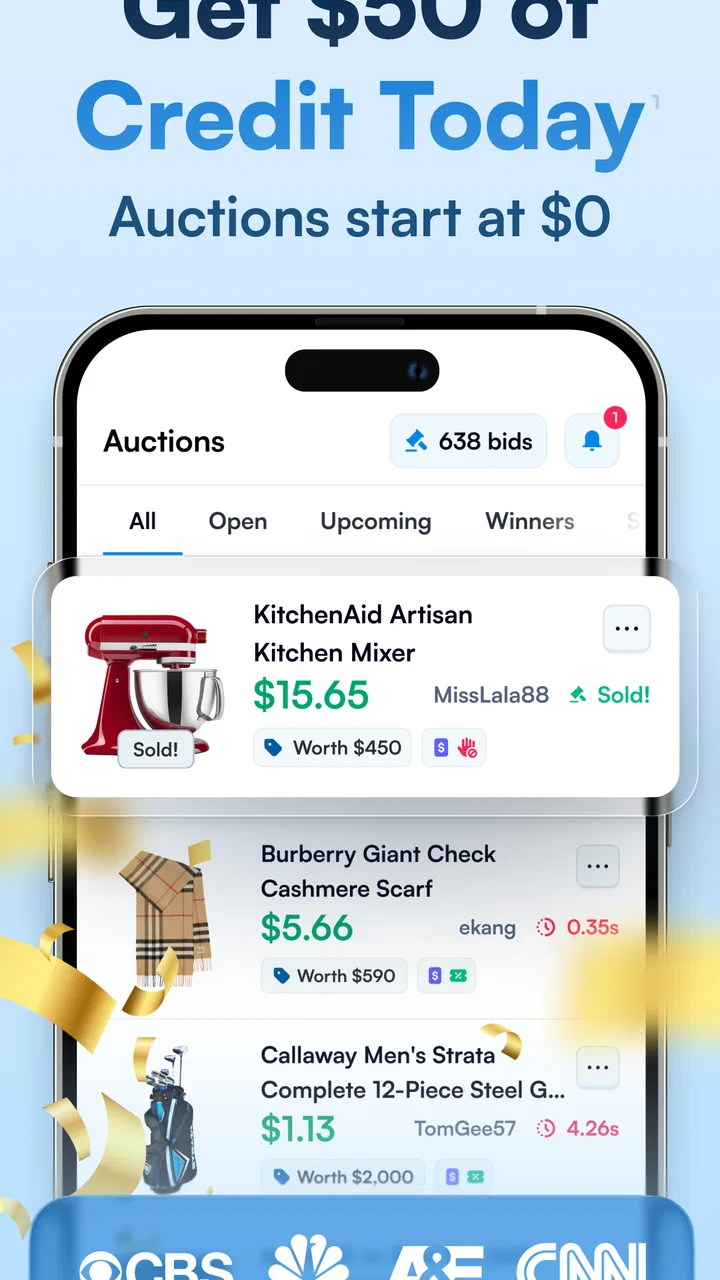
DealDash is an online auction platform where users can bid on a variety of products at discounted prices. Unlike traditional auctions, DealDash uses a 'pay-per-bid' model, where each bid costs a small fee. Users compete by placing the highest bid within the auction's time limit. If no one else bids before the timer hits zero, the highest bidder wins and pays the final auction price.
02How do I get started with DealDash?
To start using DealDash, download the app from the App Store or Google Play, and create an account. Once registered, you can purchase bid packs that allow you to participate in auctions. Explore the various categories, select an auction, and start bidding. Remember, each bid costs money, so plan your strategy wisely.
03Are there any tips for winning auctions on DealDash?
Winning on DealDash requires strategy and patience. Monitor auctions closely, especially during the final seconds. Avoid bidding wars by placing bids when activity is low, typically during off-peak hours. Utilize the 'BidBuddy' feature to automate your bidding, ensuring you don't miss the chance to win while away from the screen.
04What happens if I don’t win an auction on DealDash?
If you don't win an auction, DealDash offers a 'Buy It Now' (BIN) option. This allows you to purchase the item at its retail price, and the bids you used in that auction are returned to your account. This feature helps mitigate the risk of losing money on unsuccessful bids.
05Is DealDash safe and reliable to use?
DealDash is a legitimate platform with a significant user base and years of operation. It offers secure payment methods and a money-back guarantee for first-time users who aren’t satisfied. However, as with any online activity, users should exercise caution and ensure they understand the bidding process to avoid unnecessary spending.
Pros
- User-friendly interface for easy navigation.
- Wide variety of products available for bidding.
- Real-time bidding updates and notifications.
- Potential to save money on great deals.
- Secure payment options ensure safe transactions.
Cons
- Bidding can become addictive and costly.
- Limited time to complete some auctions.
- Requires strategy to outbid others effectively.
- Shipping fees can add up to total cost.
- Not all items may be available in all regions.

DealDash - Bid & Save Auctions
Gallery